Lochetto, Stephen M. 2026. “Cat 'Tales: Investigating the Legend of ‘Car-Sized’ Catfish at the Base of Dams.” Contemporary Legend, 4th ser., 4: 265–288.
Pillar · Human–Animal Interaction
Faunalore
- fauna·lore /ˈfɔː.nə.lɔːr/ n.
-
- the animals themselves — reptiles studied as biological subjects: their evolutionary relationships, anatomy, and classification.
- the lore around animals — how people raise, show, keep, and mythologize animals: the folklore and ethnography of human–animal life.
Here, one word for both: how animals and people make sense of each other.
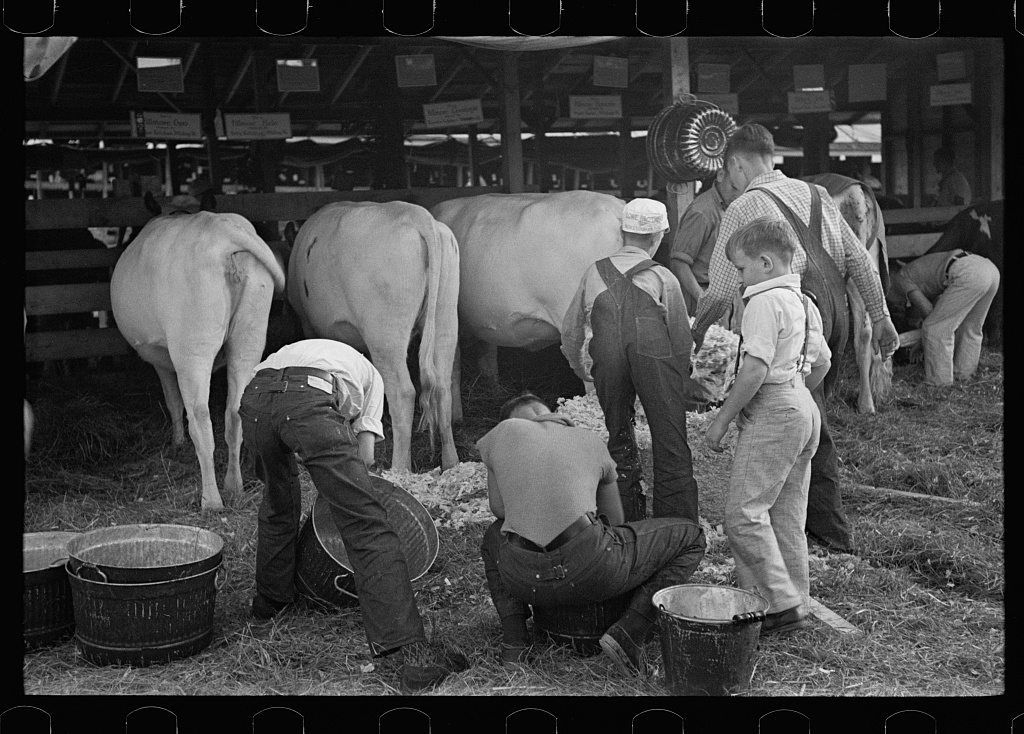
This is the cultural half of the project: animals studied not as organisms but as subjects of human meaning. The same species a biologist places on a family tree, people also raise, show, keep as pets, and mythologize — and how they do it says as much about the people as about the animals. That is the lens I bring here.
My central fieldwork is on 4-H animal projects at county and community fairs in Pennsylvania and Ohio. To a child, raising an animal for the fair is a year of feeding, grooming, record-keeping, and worry that ends in a show ring and often a sale. To a folklorist, it is cultural transmission in its most concrete form: foodways, material culture, husbandry skill, and community aesthetics passed hand to hand, generation to generation, through everyday practice with a living creature. My study of those projects, Love, Loss and Blue Ribbons, followed that arc — including the hard lesson of parting with an animal you have loved — and received the American Folklore Society's W. W. Newell Prize.
The pillar reaches beyond the fairgrounds. In herpetoculture — the keeping and breeding of reptiles and amphibians as pets — I study how a hobby becomes a culture: how keepers learn, trade, name color morphs, and pass their craft to children. This is the subject of my doctoral dissertation, American Encounters with Reptiles (Penn State Harrisburg, in progress). And in cryptozoology and contemporary legend I follow the animals people can't quite see: the "car-sized" catfish said to lurk at the base of dams, the snakes of rumor and warning. These legends are folklore about fauna — stories that reveal how we imagine the hidden lives of animals.
None of this is separate from the biology. The reptile in a legend, a terrarium, or a show ring is the same reptile a systematist describes; the culture around an animal and the science of the animal are two views of one curiosity. That is what faunalore names, and it is why this pillar sits beside the research. For the complete, citable record across both halves, see all publications.
Selected work
All publicationsReview of Health and Welfare of Captive Reptiles, 2nd ed.
HerpetologyFaunaloreLochetto, Stephen M. 2024. Review of Health and Welfare of Captive Reptiles, 2nd ed. Ichthyology & Herpetology 112 (2): 309–310. https://doi.org/10.1643/t2024004.
Love, Loss and Blue Ribbons: An Ethnographic Study of 4-H Animal Projects in Rural Community Fairs
FaunaloreLochetto, Stephen M. 2023. “Love, Loss and Blue Ribbons: An Ethnographic Study of 4-H Animal Projects in Rural Community Fairs.” Children's Folklore Review 41 (1). https://doi.org/10.14434/cfr.2023.vol41.36167.
Review of Hybrid Ethnography: Online, Offline, and In Between by Liz Przybylski
FaunaloreHerpetologyLochetto, Stephen M. 2022. Review of Hybrid Ethnography: Online, Offline, and In Between, by Liz Przybylski. Journal of American Folklore 135 (538): 487–489. https://doi.org/10.5406/15351882.135.538.10.